
Born 28.08.1943, died 11.04.2026.
Fred was always the “engine room” of the whole Oileáin project.

Fred’s early life wasn’t easy and nor was his final few years, but the bit in between was a blast, which is where our perspective lies. He worked hard, made some money, children, and then adventures, more or less in that order. His multi-faceted adventuring included sea kayaking after a lucky break brought him and David Walsh together in about 1990, two middle aged men, 46 and 40, in a swimming pool in Cabra, Dublin. Neither had any inkling they would become two peas in a pod for the next 20 years and more.

That evening, each was convinced they knew the other, but try as they might, they never did discover the link that may have joined them previously. Their experiences of youth had been poles apart, and they never ever sorted it out.
In that pool each of them was attempting (and failing miserably) to learn the “eskimo roll“, a process involving the canoeist turning the canoe upright again after a capsise. This is an important skillset for any canoeist, but for going to sea, it is essential altogether. They quickly discovered mutual ambitions in sea going canoeing, and slowly became friends.
A first ever trip away was chosen by David and agreed to by Paul Butcher, who was an expert canoeist and wanted to learn to rock-climb. Fred at that time also did some climbing (he later took climbing more seriously), so he bought a campervan especially for the occasion and came along. The first ever rock routes on Owey Island off Donegal followed, the June weekend 1991, and will always stand to the their credit.

We complemented each other and a pattern developed. David dreamed and schemed and plotted and planned, Paul’s job was to keep us alive, and Fred made the ambitions happen. He was very hands-on, practical, and he could operate or maintain and repair anything. Unimaginable to me, he preferred a fiddly petrol MSR stove to the handy gas Trangia. I think it was 1992 the threesome set out from Clifden for Belmullet, intending to not set foot on the mainland before we got there. It seemed then (and actually it is) a magical itinerary. With decent weather it is very manageable, maybe in say a week or so, and would punctuate anyone’s life experience. It did ours. One incident of many on that trip was when we failed to find a landing on an uninhabited less well known island halfway between two big inhabited well known islands, and it was that disappointment that begat the whole Oileáin project. Wouldn’t it be nice to know even that “the landing is in a cove halfway along the south side“. It could be a great convenience to the next people coming along this way, maybe save a lot of effort?

Fred then owned what was termed I think a “lifestyle company“, he oversaw a team of people providing a service, in which everyone had a place and there was a place for everyone. Therefore with planning and notice he could designate off-time. I too was flexible, being self employed, “just go, and take the hit“. Paul was hybrid, a carpenter and a medical technician, so what he needed was short notice. All this meant we chose the weekend, the week, whatever, and we went. Downside was we had to be lucky with the weather and my feeling is we were, mostly. Our favourite times, selfishly my choice I freely admit, because I had four young children, were the week immediately after the beginning of, and the week immediately before the end of, the national school holidays, so it suited. I reasoned that nobody would notice I was missing.

Fred was great in his canoe, always very strong and with great stamina, heedless of cold or discomfort, and though afraid of absolutely nothing he never went looking for trouble. He always thought safety first, last, and everywhere in between. My fondest memory of him was while attempting the Cliffs of Moher out of Liscannor, and when we reached the open water at Hag’s Head I was bricking it and said so. He never spoke, just turned on a sixpence and homeward we went. It didn’t bother him at all he didn’t get another notch that day on his belt, there was zero disappointment, and he enjoyed what we did do. You’d have to explain to him why anyone might find that a bit odd, even if later he indicated he’d actually been comfortable enough with the sea state. The difference with Fred was he enjoyed doing these things, while others sometimes more enjoy having done them, an unsubtle difference.

But notches on our belts did start appearing. We visited every corner of Ireland. Tuskar Rock is a tricky expedition, both getting there with the tides the way they are, and the landing too. On the right day the journey out to Fastnet is manageable even if quite long, and then the landing is always bothersome. Tory, just get the conditions OK on the way out and be patient waiting for the same again on the return. Despite all we did on the Antrim coast, Rathlin we visited on the ferry. Being in the right place at the right time is key to sea-going in small boats, so luck is a factor.

Fred loved to camp, especially way out there, the Inishkeas and the Saltees and lots of places in between. His favourite campsite was MacDaras, but isn’t it everyone’s? Most memorable maybe was Bray beach, just opposite the bumper cars, at the Bray Head end of the Promenade. We were cruising the Irish Sea from Fred’s Wexford homeplace at Courtown to his home homeplace being Howth. 44 hours shore to shore utilising a split shift spring tide, two nights / three days, and great fun. Skangers spotted us in the wee hours but Fred frightened them away. But sometimes the challenge is to redefine the term “camp“, which on the likes of Inishnbro or the Great Skellig is a sleeping bag rolled out on a rock or some hard place, and your fingers crossed. On the one hand he loved remote unheard-of places like “Charlie’s island” Inishvickillaun, Scariff, Dursey, High, Turk or Tuaisceart, but every bit as well as that, he would enjoy spending a whole week getting to know the sheltered inner islands of Clew Bay, south Conamara, or Roaringwater. So long as there was the sea and the sky and the fresh air, he wasn’t fussy.

It wasn’t just the 100s of Irish islands big and small and near the shore and far out there that Fred and I shared together, he was first up on any list for any trips abroad I ever dreamed up. We both got into sea kayaking for the love of Ireland, its coastline and its islands offshore, and there’s enough there you’d think to last anyone a lifetime, but faraway places were calling out to us as well. I had known the south Greenland area from a youthful climbing experience and rounding Cape Farewell 2004 was an obvious handy-to-get-to substitute for Cape Horn, just add icebergs. In hindsight I think that was the neckiest of all the adventure outings I ever did, whether on the sea or in the mountains, and I know Fred was very proud of it. We crossed the Straits of Gibraltar, south tip of Europe to north tip of Africa, which really tickled his fancy. We went back to the northwest of Greenland together in 2007 for a different experience, no objective as such beyond just being there, a holiday as much as a trip, and Fred enjoyed it as such and as much, or more. Cape Horn 2008 inevitably suggested itself and it was costly and time consuming and very far away and whatever, but as always he was first on the short list.

We didn’t know it then, but we’d just peaked. But looking back …..

Formal Training. I had come to canoeing from climbing, where in the 1980s technical qualifications were anathema to the broader community, but Fred soon introduced me to the idea of formal training, assessment and accreditation of his and my personal skills as canoeists. Sacrilege? Fred couldn’t see my problem. One of his children was training as an instructor in canoeing and needed a couple of guinea pigs to bring along, train from grade A to grade B, as part of the instructorship programme. So we went with it. Fred hated it and I loved it. We signed in and went to Limerick University where I thought the tuition was superb but Fred labelled the whole qualifications nonsense as “the cheese in the mousetrap“. I never met anyone who felt Fred was lesser in any way for not having this personal proficiency certificate, that instructorship qualification, or the other leadership badge. He was what he was, proud, and always respected.
Mistakes? We made a few. Theoretically the worst ever was at the Saltees, a mile and a half off Kilmore Quay. In a pea-soup we left the harbour to veer hard left into a strong left-right stream, but long story short, mea culpa, the stream was flowing right-left (and we never looked at available lobster pot buoys) so that almost six hours later we landed on Little Saltee, two kilometres out. In practical terms, rock hopping a mile or so off

Tranarossan Beach near Downings in County Donegal wasn’t wise, in April 1995, and we were “all in”, in cold water, the worst conceivable situation for a kayaking group, nobody upright and dry in their boat to bring back order to things, and Fred’s boat badly holed below the waterline. We managed.

Proud moments? We went “all in” several times under controlled circumstances, usually exiting some hard rock offshore bit of real estate, where there is no other way, say Eagle Island or the Tearaght or almost any lighthouse or other rugged islands, where it’s the only way. We did things differently to the generation of sea kayakers that preceded us, from a systemic perspective, for instance those hard rock departures, and also we always always helped each other in and out of boats on difficult shores or storm beaches or even just steep slipways. 1980s SOP was do it yourself. A whole group might approach a landing which, be it easy or challenging, every individual would land, solo, unaided. Logically someday you’ll need to, so I can see the point, but it grated, and we just didn’t buy it. We thought they thought they were canoeists – on the sea, where we felt we were sea-goers, in canoes.
Personal relationships. Fred and I fought, like family, relentlessly but always forgiving. Fred was stuck in his ways worse than anyone I ever came across, from the brand of marmalade to the type of toast to the time of bedtime or getting up. Nothing could disturb his expectations. I am told I am difficult myself, but I suspect my informants are only teasing? We spent so much time

cheek by jowl, things inevitably got strained and I well remember the denouement, on a pier outside Sneem, where we snarled and hurled abuse at each other, before eventually came the rapprochement. Long story short it was agreed I’d buy my own campervan. It worked. We got on much better after we stopped sleeping together.
The end-game. When Fred could no longer join me in my islanding expeditions, the whole project necessarily became the poorer for that. Nobody else was ever, or is, or will ever likely be, interested in such work. Spending a couple of days

reporting on a group of islands about which is and which isn’t worth the attention of the passing recreational user, is a thing most paddlers are surely grateful somebody is at, save them the effort, but they don’t want to be at it themselves? Fred and I loved it, but easy to see why others might value our efforts but surely not want to put in the hard yards. Nowadays I am always alone out there, so of necessity the work is mostly in sheltered backwaters, the islands smaller and flatter and closer to shore, sometimes even joined at low water (shush ……), good weather only, everything easier and safer to get to. But the sea is still green and the sky is still blue, and the places it brings me are still entirely new to me, my Van Rouge is still parked up on some remote pier um thráthnóna, so the adventuring still goes on. The only remaining question really is, is he watching …………..
 Scattery Island village.
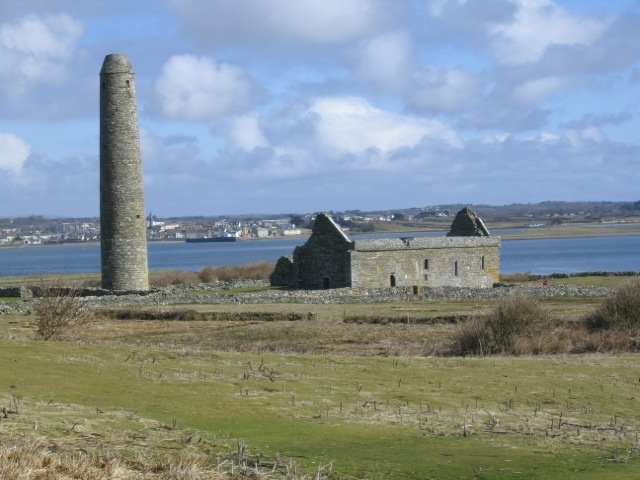 Scattery Island tower and church.
 Roancarrigbeg Wreck, the scariest of all stories in Oileáin
Inishkea Islands Pier and village, South Island
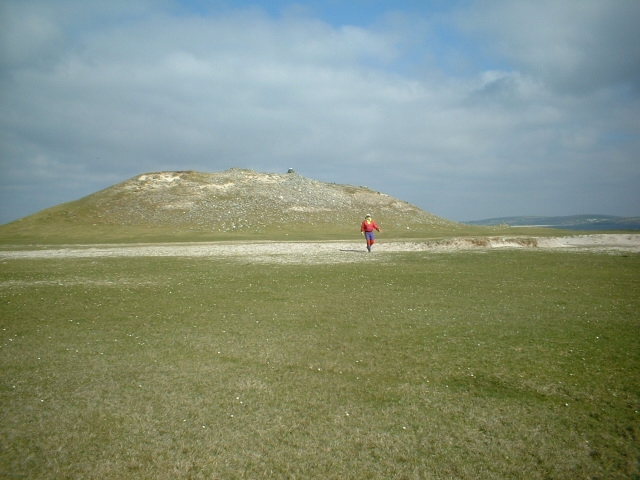
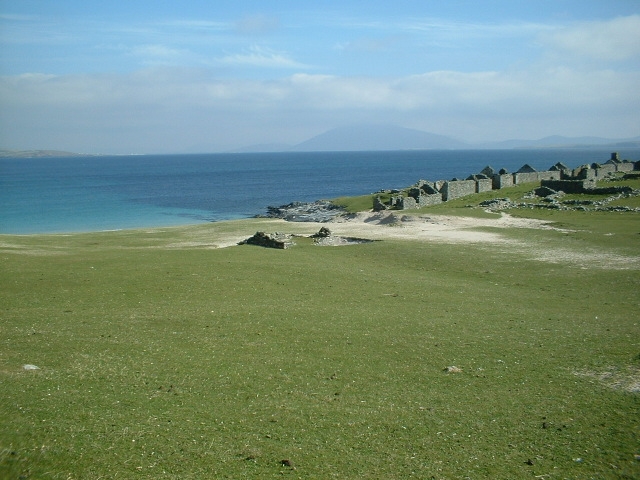
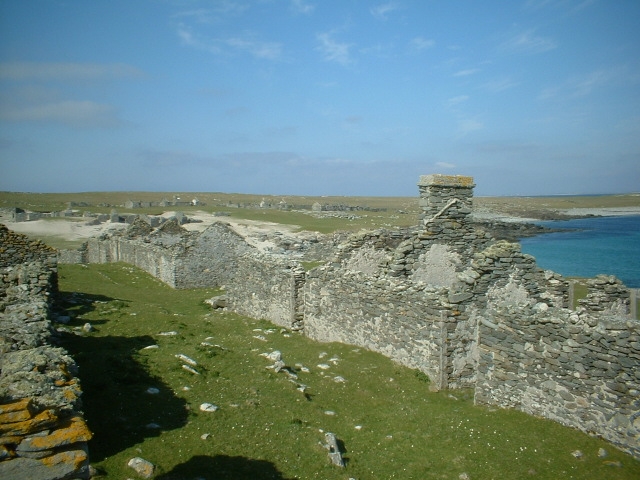 Streetscape, Inishkea North Island